
Top Blockchain AI Projects: Where Artificial Intelligence Meets Decentralization

AI blockchain technology describes a small but fast-growing category of crypto projects that combine artificial intelligence workloads — model training, inference, data labeling, autonomous agents — with blockchain infrastructure for payment, coordination, or verification. The pitch is straightforward: instead of a handful of large companies controlling AI compute and data, these networks let anyone contribute resources and get paid in a token. What is less straightforward is which of these projects have working products behind their token price, and which are riding a narrative that happens to combine two of the most searched terms in tech. This piece walks through how the mechanism actually works, profiles the projects with the most real activity behind them, and lays out where the category’s risks concentrate.

Sector at a Glance
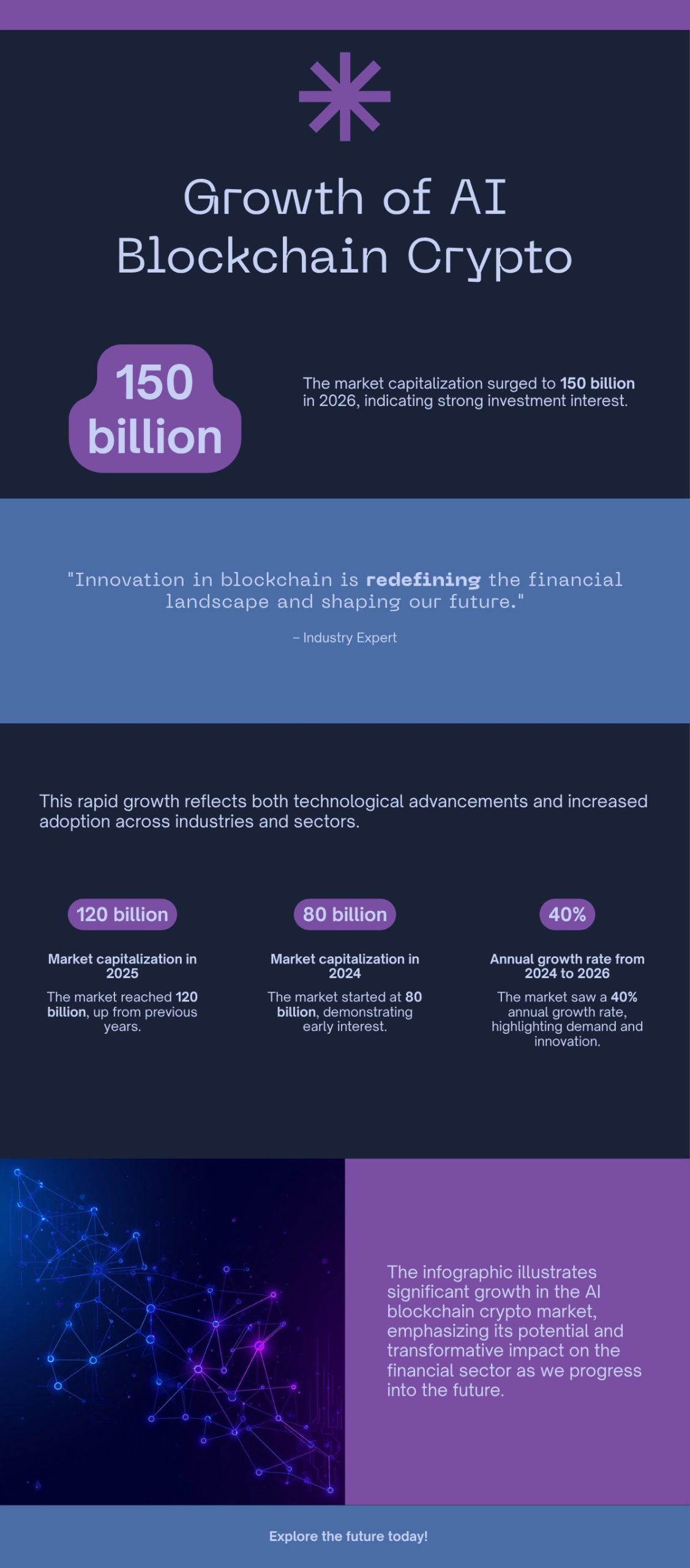
- Combined AI-token market capitalization: estimated between roughly $20 billion and $60 billion in 2026, with the range depending heavily on which tokens a given tracker classifies as “AI” — a definitional inconsistency worth noting up front
- Primary driver of recent growth: a sharp increase in venture and institutional capital flowing into projects that sit at the AI-crypto intersection, alongside a broader shift toward autonomous AI agents that can hold wallets and execute on-chain transactions
- Overall risk level: elevated and uneven — drawdowns in this category have historically outpaced Bitcoin’s, and token value does not reliably track product usage
What AI Blockchain Technology Actually Means
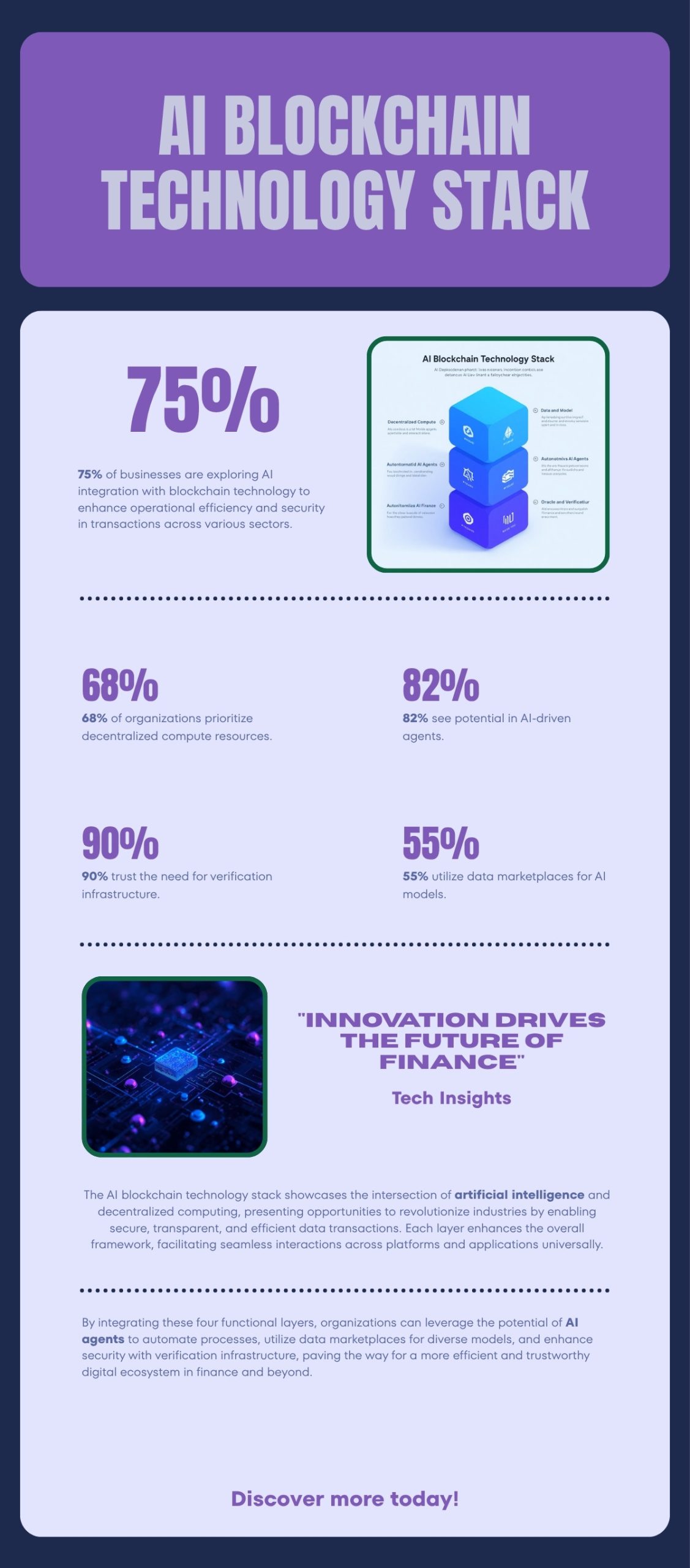
Strip away the marketing language and most projects in this category fall into one of four functional layers. The first is decentralized compute: networks that let anyone rent out spare GPU capacity for AI training or rendering work, paid in the network’s token. The second is data and model marketplaces, where developers publish datasets or trained models and earn fees when others use them. The third is autonomous agent infrastructure, which gives AI agents a wallet and a set of programmable rules so they can transact, subscribe to services, or hire other agents without a human approving every step. The fourth is oracle and verification infrastructure, which feeds real-world data into AI systems or verifies AI outputs on-chain.
These layers are not mutually exclusive, and the more ambitious projects are trying to combine several of them into a single stack. The practical distinction that matters for evaluating any specific project is whether the blockchain component is doing real coordination or settlement work, or whether it has been added to an otherwise ordinary AI product mainly to justify a token.
That distinction is not always obvious from a project’s homepage. A network that genuinely needs a blockchain will usually show on-chain activity — transactions, staked compute, or agent interactions — that scales with its claimed usage. A network where the token is bolted onto a centralized AI product tends to show the opposite: heavy marketing spend, a rising token price, and comparatively thin on-chain activity relative to its market capitalization.
Key Takeaways
- AI blockchain projects generally sit in one of four layers: compute, data/models, autonomous agents, or oracle verification
- The blockchain component should be doing real coordination or settlement work, not just hosting a token
- On-chain activity relative to market capitalization is a useful first filter for separating substance from narrative
How the Category Has Grown — and Why
The data shows a clear acceleration in capital flowing toward this intersection. During 2025, roughly forty cents of every venture-capital dollar invested in crypto companies went to businesses that were simultaneously developing AI products — more than double the share from the year before. That is a venture-funding statistic, not a token-price statistic, but it explains where a meaningful share of the sector’s newer projects and updated roadmaps are coming from.
On the token side, trackers that isolate AI blockchain technology projects put the category’s combined market capitalization in the tens of billions of dollars through the first half of 2026, though the exact figure moves depending on which tokens are included. Chainlink, an oracle network that predates the current AI narrative by years, is counted by some trackers as the largest “AI” token by market cap simply because oracle data feeds are positioned as AI infrastructure. That inclusion illustrates a real problem with sizing this sector: the category boundary is loose enough that headline market-cap figures can overstate how much of the number reflects AI-specific activity versus general blockchain infrastructure that has been re-labeled.
What this data shows is that institutional and venture interest in the AI-crypto intersection has genuinely increased. What it does not show is that every token benefiting from that interest has a product that depends on AI, or that current valuations reflect sustainable demand rather than sector-wide enthusiasm spilling over into adjacent tokens.
In Short
- Venture funding into AI-crypto crossover companies roughly doubled its share of total crypto VC dollars in 2025
- AI-token market cap estimates vary widely by tracker because the category boundary is loosely defined
- Rising capital inflow to the sector does not by itself confirm that individual token valuations are justified
The Leading Blockchain AI Projects
The following projects show the most measurable on-chain activity, developer output, or institutional attention within AI blockchain technology as of mid-2026. This is a survey of what each project does and how it has evolved, not a ranking of which token will perform best.
Bittensor (TAO) — Decentralized Machine Learning Marketplace
Bittensor organizes its network into “subnets,” specialized markets where machine learning models and other computational resources compete to produce useful outputs. Participants are rewarded in TAO based on how the network’s built-in evaluation mechanism scores their contributions. The project completed its first scheduled halving in December 2025, cutting daily TAO issuance from 7,200 tokens to 3,600 — a supply-side change modeled loosely on Bitcoin’s issuance schedule. Bittensor’s market capitalization has generally ranked among the largest in the AI-token category, reflecting sustained developer activity across its growing number of subnets.
The Artificial Superintelligence Alliance (Fetch.ai, SingularityNET, CUDOS)
Announced in March 2024, the Artificial Superintelligence Alliance was the largest token merger in crypto history at the time, combining Fetch.ai’s autonomous-agent infrastructure, SingularityNET’s decentralized AI services marketplace, and Ocean Protocol’s data-exchange tools under a unified FET token. The alliance’s composition has since changed: Ocean Protocol withdrew in October 2025 amid governance disputes and ongoing litigation, leaving Fetch.ai, SingularityNET, and compute partner CUDOS as the current members. Through 2026 the alliance has been shipping a broader product stack, including an agentic platform called ASI:One, a family of Web3-native language models under the ASI-1 name, a decentralized compute layer called ASI:Cloud, and a purpose-built layer-1 blockchain, ASI:Chain, targeting mainnet in late 2026 or early 2027. The alliance’s stated mission is to pursue artificial general intelligence development in a decentralized, token-holder-governed structure rather than under a small number of corporations — an ambitious goal that is still largely aspirational relative to where the technology stands today.
Render Network — Distributed GPU Compute
Render Network connects people who need GPU rendering or AI compute power with node operators who have spare capacity, settling payment in its native token. It predates the current AI narrative as a GPU-rendering network for 3D graphics and creative work, and has repositioned significant messaging around AI training and inference workloads as demand for GPU compute has grown. Its market capitalization has fluctuated with both the broader AI-token cycle and GPU compute demand more specifically.
NEAR Protocol — Chain Abstraction and Agent Infrastructure
NEAR Protocol is a general-purpose layer-1 blockchain that has increasingly marketed itself around AI use cases, particularly chain abstraction tools intended to let AI agents interact across multiple blockchains without users manually bridging assets or managing separate wallets per chain. Its inclusion in AI-token indices is a good example of a broader trend: general infrastructure projects adding AI-specific tooling and messaging to capture attention from the sector’s growth, rather than being AI-native from inception.
Chainlink — Oracle Infrastructure Reframed as AI Infrastructure
Chainlink is best known as the dominant oracle network connecting smart contracts to real-world data. Several AI-token trackers count it as the largest token in the category by market capitalization, on the reasoning that reliable off-chain data feeds are a prerequisite for AI agents that need to act on real-world information. Chainlink’s core business is not AI-specific, and its inclusion in this category is a useful illustration of how broadly the “AI blockchain” label gets applied across the sector.
Akash Network — Decentralized Cloud Compute
Akash Network operates an open marketplace for cloud compute, letting data center operators and individuals with idle GPU capacity lease it out to developers who need infrastructure for AI training and inference jobs. The pitch is essentially a decentralized alternative to renting compute from a small number of large cloud providers, with pricing set by an open marketplace rather than a fixed rate card. Akash has positioned GPU leasing for AI workloads as its primary growth driver through 2026, competing directly with both centralized cloud vendors and other decentralized compute networks such as Render for the same underlying demand.
| Project | Primary Function | 2026 Development to Watch |
|---|---|---|
| Bittensor (TAO) | Decentralized machine learning marketplace via competing subnets | Post-halving issuance schedule and subnet growth |
| ASI Alliance (FET) | Autonomous agents, AI services marketplace, decentralized compute | ASI:Chain layer-1 mainnet, targeted late 2026 or early 2027 |
| Render Network | Distributed GPU compute for rendering and AI workloads | Demand shift from graphics rendering toward AI inference |
| NEAR Protocol | General layer-1 with chain abstraction for AI agents | Cross-chain agent tooling adoption |
| Chainlink (LINK) | Oracle data feeds, increasingly framed as AI infrastructure | Expansion of data feeds relevant to AI agent decision-making |
Bottom Line
- Bittensor and the ASI Alliance show the most AI-native product activity in the category
- Render Network and NEAR Protocol illustrate general infrastructure being repositioned around AI demand
- Chainlink’s inclusion shows how loosely some trackers apply the “AI blockchain” label
Risks, Limits, and Failure Modes
The single biggest risk across AI blockchain technology projects is that token valuations can reflect narrative momentum rather than measurable usage. Some projects carry market capitalizations in the hundreds of millions or billions of dollars while showing user counts and on-chain revenue that would be unremarkable for a small software company. The word “AI” has become a marketing lure attached to projects with little or no actual machine learning development behind them, which makes it genuinely difficult for a newcomer to distinguish a team with a working product from one riding sector-wide attention.
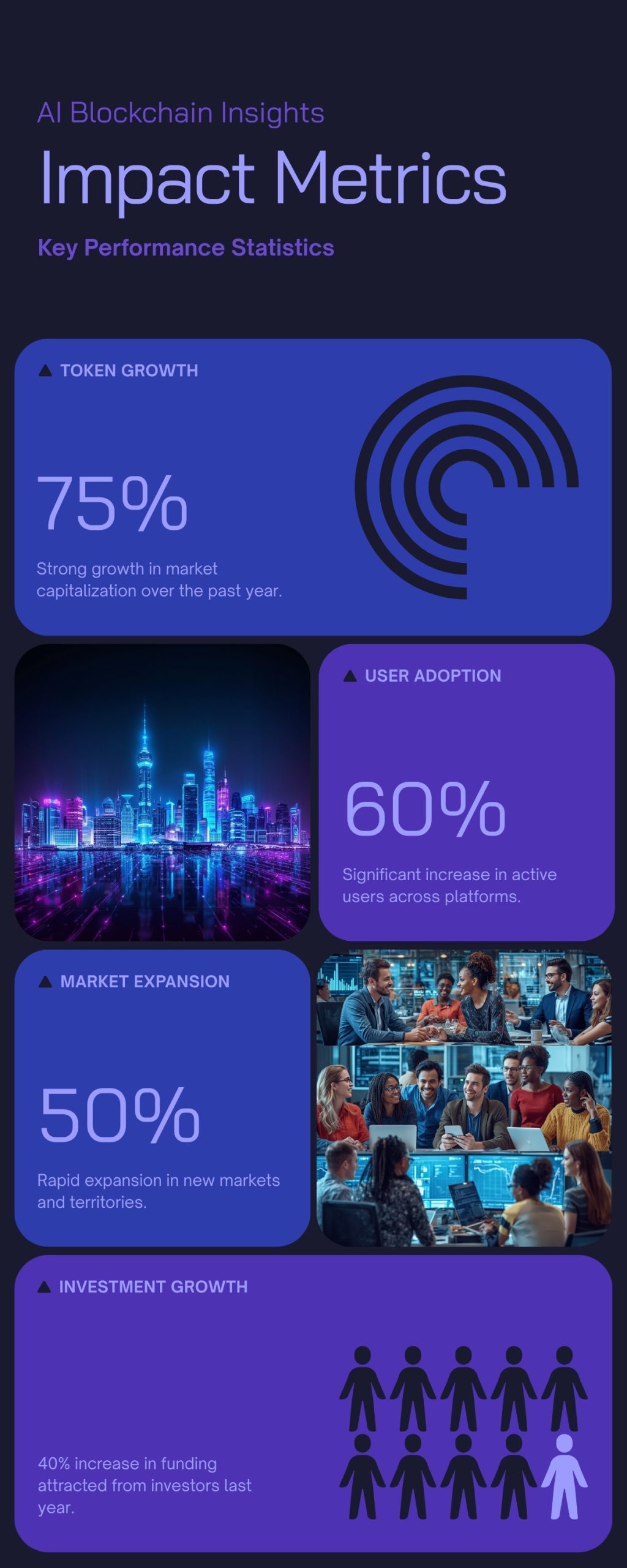
Volatility compounds this problem. Data from the first half of 2026 shows the average AI-token correction reaching roughly 65%, compared with about 30% for Bitcoin over the same stretch — a meaningfully deeper drawdown that reflects how much of the category’s price action is driven by sentiment rather than stable, recurring demand. Crypto markets broadly are capable of 70% to 80% drawdowns from cycle peaks, and thinly traded AI tokens are not exempt from that pattern; if anything, lower liquidity in smaller AI-token projects tends to make swings sharper in both directions.
Agent tokens carry an additional, more specific risk. Many of them trade on attention before the underlying agent technology has proven durable, real-world utility. Autonomous agents holding wallets and executing transactions is a genuinely new capability, but a working demo is not the same as a system operating reliably at scale with real economic stakes attached. A serious project in this category usually has open-source code, a working network with verifiable on-chain activity, clear tokenomics, visible developer activity, and a specific roadmap. A red flag worth watching for is the combination of a high market capitalization with minimal corresponding on-chain activity — a pattern that shows up repeatedly across projects that underdeliver relative to their valuation.
Quick Summary
- AI-token valuations do not reliably track actual product usage or revenue
- Average AI-token drawdowns have outpaced Bitcoin’s in 2026, reflecting sentiment-driven price action
- High market cap paired with low on-chain activity is a consistent red flag across this category
Two Ways to Read This Sector
There are two reasonable, competing interpretations of what is happening in AI blockchain technology right now, and neither is obviously wrong. The first interpretation treats this as a genuine infrastructure convergence: AI systems increasingly need payment rails, verifiable compute markets, and coordination mechanisms that blockchains are structurally suited to provide, and the current wave of projects represents early but real building toward that need. Under this view, today’s volatility and hype are the normal, messy early phase of a legitimate new infrastructure category, not evidence against it.
The second interpretation treats “AI blockchain” as largely a repackaged narrative — two of the most-searched terms in technology combined to attract capital and attention, applied to projects that would have existed anyway under a different label. Under this view, the sector’s rapid market-cap growth says more about capital chasing a compelling story than about any underlying technological necessity for blockchain in AI workflows specifically.
Both readings can be true simultaneously for different projects within the same category. A handful of networks, most visibly Bittensor and the ASI Alliance, show activity patterns consistent with real infrastructure being built and used. A larger number of smaller-cap projects show patterns more consistent with narrative-driven speculation. Treating the entire category as either uniformly legitimate or uniformly speculative misses this split, which is really the more useful lens for evaluating any specific project.
Key Takeaways
- One reasonable view treats AI blockchain projects as early, legitimate infrastructure convergence
- A competing view treats the label as a narrative combining two popular tech terms to attract capital
- Evidence supports both readings depending on the specific project, not the category as a whole
How to Evaluate an AI Blockchain Project Yourself
Rather than relying on a project’s own marketing or a single ranking list, a more durable approach to evaluating AI blockchain technology is to work through a short set of concrete checks that hold up regardless of which project you’re looking at. These checks apply equally whether the AI blockchain technology in question is a compute marketplace, an agent platform, or an oracle network positioning itself as AI infrastructure.
Start with on-chain activity: does the network show real transactions, staked compute, or agent interactions that scale with its claimed adoption, or does most of the activity trace back to token trading rather than product usage? Next, check whether the AI component is verifiable — can you find published research, model benchmarks, or technical documentation, or is the AI claim limited to language on a homepage and a roadmap? Tokenomics matter as well: an issuance schedule that dilutes holders faster than the network grows its user base is a structural headwind no amount of narrative momentum offsets.
Developer activity is one of the more reliable, low-effort signals available to an outside evaluator. A project with an active, public code repository and a visible history of contributions over months or years is meaningfully different from one where development activity is sparse or concentrated around token launch events. Finally, weigh the team’s track record and transparency: projects that clearly disclose governance structure, treasury management, and past setbacks tend to be more accountable than those that only communicate through promotional channels.
None of these checks guarantee a project’s long-term success, and none of them are a substitute for accepting that this entire category carries elevated risk. What they do is shift the evaluation away from narrative and toward evidence that can actually be checked.
In Short
- On-chain activity that scales with claimed adoption is a stronger signal than marketing language
- Verifiable technical documentation and developer activity separate substantive projects from narrative-driven ones
- No evaluation checklist removes the category’s underlying volatility and uncertainty
Who Should Pay Attention to This Sector — and Who Should Stay Away
Developers and technically minded readers evaluating where decentralized compute or agent infrastructure might fit into their own work have the most direct use for AI blockchain technology, since assessing a project’s actual architecture and on-chain activity is something they are equipped to do firsthand. Long-term investors who already understand crypto’s volatility and are specifically interested in the AI-blockchain intersection as one small piece of a diversified approach may find it worth monitoring, provided they size any position accordingly and do not treat sector enthusiasm as a substitute for project-level due diligence.
This sector is a poor fit for anyone looking for a stable or predictable place to park capital — the volatility data above makes that fit poorly with any risk-averse goal. It is also a poor fit for readers who are drawn in primarily by the word “AI” without independently checking whether a given project’s blockchain component does real work; that pattern of buying on a label rather than on verified fundamals is exactly the failure mode described in the risks section above. Where this approach breaks down most clearly is with small-cap agent tokens that have thin trading volume and unverified usage claims — positions that can be difficult to exit even when the underlying thesis turns out to be wrong. In those cases, broader, more liquid crypto assets or traditional diversified investments are more suited to investors who are not prepared to do project-by-project technical evaluation.
Next Step
Before treating any specific project as a serious example of AI blockchain technology rather than a speculative label, work through the following checks.
- Check a project’s on-chain activity (transactions, active subnets, staked compute) against its market capitalization before assuming the two are correlated
- Read the project’s own documentation on tokenomics and issuance schedule rather than relying on summary articles alone
- Look for independent developer activity metrics, such as public code repositories with recent, non-trivial commits
- Separate a project’s marketing language from its verifiable product — the presence of the word “AI” in a name or pitch is not evidence of working AI infrastructure
- If considering any position, size it based on the sector’s documented volatility rather than its narrative momentum
| Source / Website | Purpose |
|---|---|
| CoinGecko AI Category Index | Tracks market capitalization and price data across tokens classified as AI-related |
| Bittensor Documentation | Technical reference for subnet architecture and TAO issuance schedule |
| Artificial Superintelligence Alliance (SingularityNET) Announcements | Primary source for ASI Alliance membership changes and roadmap updates |
Further Resources & Tools
| Resource | Purpose |
|---|---|
| CoinMarketCap AI & Big Data Category | Independent tracker for comparing AI-token market capitalization and trading volume |
| Ledger hardware wallet (Amazon) | Cold storage option for long-term token holdings |
| Trezor hardware wallet (Amazon) | Alternative cold storage option |


